|
|
冠层
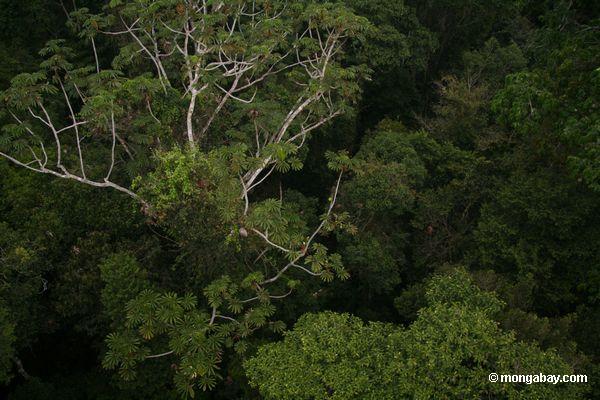 雨林冠层. (Photo by R. Butler) 雨林冠层. (Photo by R. Butler)
|
写 Rhett Butler. 翻译 Che Fei
07/12/2007
冠层
在雨林里,据估计有70-90%的生命生存在位于阴凉地面之上的树中. 一般的热带雨林垂直方向上至少分为5层: 森林树冠层, 冠层, 林下叶层, 灌木层和地面表层. 每层都有各自与众不同的与周围生态系统相互影响的动植物. 森林树冠层指的是冠层外沿之上20-100高的树冠. 冠层是指那些紧密分隔开的树木和它们的树枝的稠密的顶层, 而林下叶层指形成冠层下面断折层的分隔更为广泛的、较小的树种和幼龄植株. 灌木层的特征是它只是由生长在森林地面5-20英尺的灌木和幼龄树木组成的. 地面表层是由许多树木、菌类植物真和低生长植物组成的森林地面表层. 这些分层并不总是有着明显的不同,它们也随着森林的不同而变化,但它们可以作为一种了解森林营养性、机械性结构的好的模型.
森林树冠层的特点是它由位于树冠层外沿之上的零散的超高树组成,一些树种有210英尺(65米)多高.在森林树冠层的下面,冠层横向扩展很大的距离,当从飞机上观察它们的时候,看上去从不间断的样子.然而,不管树枝有多重叠,冠层树木之间很少连锁甚至相互碰触.相反地是它们之间都分隔有几英尺的距离.这些树的树枝为什么相互不接触这仍是个谜,但人们认为主要是它们在保护自己不受食树毛虫和一些如同叶枯萎病一样的树木疾病的侵害.为了活下来,生存者冠层中的生物一定要有通过爬行、跳跃、滑行或飞行来顺利通过林间间隙的能力.
这数十亿计的冠层叶子,就像微型的太阳面板一样,通过光合作用将太阳能转变为叶片中化学能从而为森林提供能量来源.光合作用是这样一个过程,在这个过程中,植物将大气中的二氧化碳和水转变成氧气和单糖. 由于冠层树木光合作用速率很高,所以这些植物的果实、种子、花以及叶子的产量都较高,而这些正好用于支撑广泛的动物多样性.除了能够吸引大量的野生动植物外,树冠层在调节区域和全球气候方面起着重要的作用,因为它是最重要的热、水汽和大气气体的交换地.除了吸收太阳能和调节气候外,树冠层保护林下叶层免受强光、干风及大雨的影响,并且保持了下面森林的潮湿气候.因此,森林内部比起冠层顶部较高部分来说更稳定些.并且被外层保护着免受冠层极端条件(如温度的变动、太阳辐射的破坏、强风)的影响.在较低的冠层中,阳光弥漫着,好像受到了什么限制;湿气较重并且更始终如一;直接射进的阳光很少.
复习题:
- 雨林从哪获取能量?
- 大多数的雨林物种居住在什么地方?
[英语]
续: 研究雨林冠层
|
|
|
MONGABAY.COM
Mongabay.com 是一家专门提供自然环境新闻资讯的门户网站。
菜单
雨林冠层—介绍
在雨林里,据估计有70-90%的生命生存在位于阴凉地面之上的树中. 一般的热带雨林垂直方向上至少分为5层: 森林树冠层, 冠层, 林下叶层, 灌木层和地面表层.
雨林冠层—调查与研究
冠层以前很少为人们所了解,直到最近,科学家们发现了研究冠层的有效方法。然而即使用上现代的研究技术,冠层的许多物种、系统及关系对人们来说仍是神秘的,很多现象仍有待研究与发现.
雨林冠层—上层林冠
上层林冠由高于周围冠层之上的巨大的露生树木组成.这些树木至少按照热带的标准是巨大的,其中一些超过了213英尺(65米)的高度,它们的树枝水平伸展着,有100英尺(30米)多高.这些树木与冠层中的树木生活在不同的气候中.上层林冠层空气比较干燥,树枝间不时吹着适度的大风.这些上层林冠树种已经适应了去充分利用风吹散种子,这些树木的种子有着特有的喜阳性,并且在某一特定机制下能够被风吹向离母树很远的距离.南美的<
雨林冠层—冠层树木
在各种类型的雨林中冠层都占了很大的一块区域, 厚度范围在10-40英尺(3—12米)之间.无数的地面居住物种已经习惯在冠层下的生活,这包括蠕虫,蟹,蛙,袋鼠,穿山甲还有豪猪等,在这里它们有丰富的果实,种子,落叶作为食物,还有被这些食物所吸引的大量的动物.由于有多种多样的附生草质和藤类,冠层树木的生命年限都非常长.
雨林冠层—附生植物
单在新热带界就有超过15,000种附生植物生存, 并且全世界有超过30,000种附生植物没有被分类. 附生植物描述的是这样一种植物,它如同寄生虫一样在宿主上生长,不同的是,宿主树木并不是它的营养来源,它主要从空气、降雨和落在树枝上的肥料中获取养分.它们这种附生的生活方式使它们适应了雨林的生活,不仅能够获得更多的光照,也能接触更多的冠层动物传粉者,风传树种的可能性也大了.对生活在温带地区的人们来说,附生植物再熟悉不过了, 因为许多的室内盆栽植物和"铁兰类"植物实际上就是所说的雨林中附生植物.
雨林冠层—藤本植物和热带藤本植物
在冠层中有大量的攀援植物,藤本植物,和热带藤本植物(藤本树木),它们是组成热带雨林植物的重要的一部分.
雨林树冠层—动物
正是由于冠层中多样的食物来源和独一无二的生态位的存在,才有大量的动物在此生存.动物们经常聚集在鲜花盛开的树木周围,使得这些树成为观览野生动植物最合适的位置.在这些有着充足食物的地方,动物们建立了自己的"领地",但由于地面被冠层树叶覆盖的缘故,它们就分不清各自"领地"的界线了,于是大多数动物开始依靠声音信号来分辨.因此逐渐地这些冠层中的"居住者"属得上世界上声音最大动物了.许多的灵长目动物会发出哀号和尖叫声,而小鸟们通过鸟叫声向别的动物宣示它们的到来.
雨林冠层—动物的移动
卷尾具有滑行的能力,因为树冠层的分支之间有高低差距,所以这个地区的动物必须通过一些的方式来得到这项技能.动物在大多数冠层林中能够通过攀登,跳跃或者飞行从这棵树到那棵树,而且要配备一些适当的装置使他们成功.
;蝙蝠
雨林中数量最多的哺乳动物并不是那些在地面上生活的大型动物,而是蝙蝠.热带地区的蝙蝠最多,同样地, 蝙蝠也是热带雨林种类最丰富的物种,它们组成哺乳动物总数的50%以上.最大的蝙蝠有翼展达6英尺(1.8米)的狐蝠,最小的有世界上最小的哺乳动物泰国的大黄蜂蝠,它甚至比美国的便士还要轻.热带蝙蝠的摄食习惯也是多种多样的,它们的食物包括水果、花蜜、血液等.蝙蝠用于庇护自己的"居所"也是各有不同.
树冠层
灵长类是每一个大陆雨林界的特征,除了澳大利亚界,大约有超过50个属的200种生物组成.灵长类被认为是10亿年前到6.5亿年前以昆虫为食的动物的后代.远古的哺乳动物大多数像今天的狐猴和眼镜猴,而较高级的灵长类直到3700万年到2300万年之间才出现。高级的灵长类包括猴子,猿,猩猩和人,而且非人类的物种一般被分为远古世界的猴子和新世界的猴子
雨林冠层—其他的哺乳动物和鸟
世界上有10,000多种鸟类,其中大多数在热带地区被发现,在亚马逊流域和印度尼西亚发现的所有鸟类当中,其中有50%也生活在热带地区.
雨林冠层 - 两栖动物,爬行动物, 无脊椎动物
在热带雨林中,蛙是数量最多的两栖动物. 与那些大多数只生活在水边的温带蛙不同, 热带蛙基本上生活在树上,生活在地面附近水体的相对较少.出现这种情况的原因相当简单: 由于蛙有近半的呼吸是通过皮肤来实现的,所以它们必须总是保持着皮肤的湿润.雨林和频繁的暴雨带来的湿气为热带蛙转移到树上和避开许多雨林水域的天敌提供了更多的自由.温带蛙和热带蛙之间的区别延伸到了栖息地之外.尽管大多数雨林动物在植物或地面上产卵,然而几乎所有的温带蛙却在水中产卵.离开水面后,这些蛙类就摆脱了食卵动物如鱼、虾、水生昆虫和昆虫幼虫的捕食.
|
|
|
|