|
|
消失的机遇
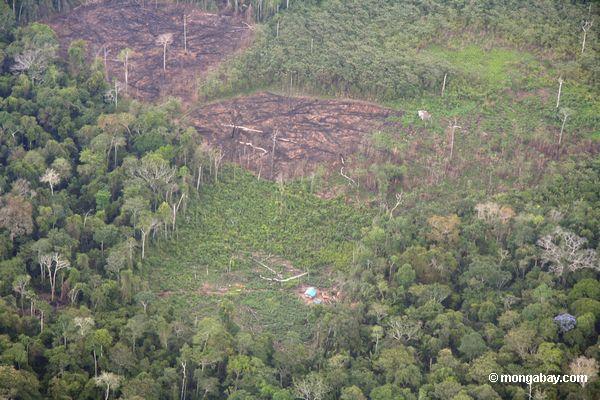 部分的雨林被砍用作种植农业. (Photo by R. Butler) 部分的雨林被砍用作种植农业. (Photo by R. Butler)
|
写 Rhett Butler. 翻译 Che Fei
07/12/2007
可再生资源的丧失
毁林会造成国家的潜在税收收入丧失,当有价值的土地产物被那些无用的灌木丛和草地取代时.热带森林能为国家经济提供重要的可再生资源,他们可以使经济取得显著的增长和发展.
从理论上讲,伐木是一个可持续的活动,只要不破环资源的基础,它是可以产生持续的收益来源—尤其是在次生林和人工林.但是,许多雨林的砍伐实际并不是可持续的,消除了 热带国家长期的潜在收益.木材现在在以前出口木材的东南亚和西非国家的重要性下降的产业由于他们过度的开采.而一些国家已经提出,限制采伐,使他们的操作面对违法的困难.世界银行估计每年由于非法采伐政府将损失50亿美元的收入,而那些以木材生产为主要经济的国家每年的损失加起来有100亿美元.
砍伐之后,由热带雨林提供的一个最大的"可再生资源"是生态旅游.这个繁荣的市场每年给这些热带国家从世界上带来数百亿美元的收入.遭受毁林的生态旅游—少数的旅游者,更别提要旅游的生态旅游者是为了看污染的河流,先前还是森林的树桩,贫瘠的土地,大猩猩的尸体,以及如今被同化的森林土著.最近,由印度尼西亚的森林火灾产生的大量的烟雾造成了到新加坡,马来西亚,印度尼西亚的游客数量显著下降.
森林的产物多发展中国家的经济有很重要的作用.在1994年,森林产物的出口达到了1440亿美元,其中次要的,非木材产品至少占到了10%.这些数据不包括由当地居民消耗的产品的价值,他们可能用木材去盖房,收集森林的坚果和水果作为食物.通过毁林产生的短期经济繁荣对发展中国家的长期经济来说是一场灾难,因为它不仅毁灭了生态系统提供的各种重要的服务,而且破坏了森林的一些潜在的产物. 目前,从热带硬木得到的收益已从1980年的水平下降了25%,并且预期在世纪之交会降至低于1980年的75%的水平.只要这些国家还发展他们的经济,他们会继续耗竭他们的森林资源,而且可能在不远的将来,就会从温带国家如前苏联,加拿大,美国等进口木材.马来西亚的木材出口下降了60%,而菲律宾(在1980年代早期是主要的木材出口国)实际上已经停止了木材出口.从这两个例子中看出,跌幅主要是因为森林资源的收成减少.在2000年,33个热带国家中只有10个在仍然出口木材.新的热带伐木者,如拉丁美洲,巴布亚新几内亚,索罗门群岛,柬埔寨和非洲部分地区,包括喀麦隆,加蓬,加纳和刚果在他们的资源被耗竭之前是不会停止的.
出了产出木材,热带国家还损失了大量的可再生的森林产物如巴西坚果树生产的坚果,东南亚的榴莲还有Belize生产的美洲蜥蜴.在1996年,非木材的森林产物,把国内的消费价值和国际贸易的加起来,估计可达到900亿美元.许多的雨林产物如果没有雨林系统的作用是无法存在的.因此,毁林造成了发展中国家森林可再生资源的丧失并对他们未来的经济造成了很大的影响.
野生动物的自然冲突
随着他们栖息地的变小,许多的动物开始到他们传统的森林外部去寻找食物,有的都进入了人类居住地.野生动物如大象,毒蛇,大猫在森林退化的地区都遭受了致命的遭遇.在过去的几年里森林大象总是因它们在亚洲的死亡冲突(人类和大象都有死亡)制造新闻.一些国家为了保障大象的安全已着手制定计划使大象远离作物,但一些农民认为杀死这些冒犯的动物更加容易.
复习题:
[英语]
续: 森林的气候作用
|
|
|
MONGABAY.COM
Mongabay.com 是一家专门提供自然环境新闻资讯的门户网站。
菜单
热带地区毁林对全球的影响
世界范围内的雨林面积还在减少.这真的没有什么不同吗?为什么有人担心一些植物,动物,蘑菇还有微生物会死亡?雨林通常是比较热而且潮湿的,很难达到一致,林中四处都有昆虫而且还有一些躲避的野生动物.
毁林-对地方和国家的影响
当地是毁林最直接的受害者.随着森林的失去,当地的生物群落也失去了很有价值的但是常被低估的系统,它们可以确保有规律的清洁水并且保护群落远离洪水和干旱.森林的作用就像海绵一样,可以吸收热带风暴带来的降雨,而且可固定土壤,并且能有规律的释放水分.热带雨林的这种调节特点可以缓和因森林被清理而发生的破坏性洪水和干旱的循环.
森林砍伐的影响 - 土壤侵蚀
树根扎根固定于土壤中,在整个热带地区树木的消失引起了普遍的土壤侵蚀.仅有少数地方土壤保持很好,森林砍伐后,这些土壤很快就会被大雨冲走.因此农作物产量下降,人们不得不花钱进口外来的肥料或者去砍伐另一片森林.哥斯达黎加每年丧失的很有价值的表层土就达8.
森林采伐的影响 -物种的损失、灭绝和疾病
一个充分运作的森林具有强大的再生能力.过度的捕杀热带雨林物种会减少对森林的持续性和再生能力很重要的那些物种. 例如,在中非,象大猩猩、黑猩猩和大象等物种的损失降低了森林树种的传播能力,减慢了受到破坏的森林的恢复速度.在热带地区,栖息地的损失也影响着温带物种的再生.北美候鸟,作为一种重要的温带种子传播鸟类,从1978年到1988年,它的数量每年下降1-3个百分点.
毁林的影响—可再生资源的丧失,野生动物的冲突
毁林会造成国家的潜在税收收入丧失,当有价值的土地产物被那些无用的灌木丛和草地取代时.热带森林能为国家经济提供重要的可再生资源,他们可以使经济取得显著的增长和发展.
森林砍伐的全球影响—森林对气候的作用
热带雨林对地球的自然系统功能起着很重要的作用.通过它们的吸收作用、制造降雨以及气体的交换作用,雨林调解着当地及全球的气候.例如,单亚马逊河通过蒸腾作用就能制造50-80%的降水.雨林砍伐后,地球表面的反射率就会改变;风和洋流的形式的改变使得全球气候受到影响,这也改变了降水的分布情况.如果森林继续受到破坏,全球气候形势将变得更加极端且不稳定.
毁林的影响 - 森林的大气作用
雨林通过它们植物的光合作用对固定大气中的碳起着非常重要的作用.世界森林的土壤和植物包含着大气中125%的碳.当森林燃烧,恶化,被清理,就会发生相反的结果,大量的碳会以二氧化碳和其它温室气体(氧化亚氮,甲烷和其它的氮氧化物)的形式排放到大气中.当森林燃烧时,每年大约有20亿吨的二氧化碳排放到大气中,或者说有22%的二氧化碳排放是人为造成的.
毁林的影响—灭绝
还在持续的毁林造成的最大的,最持久的损失影响就是大量的物种灭绝,地球生物多样性也减少了.尽管许多的灭绝事件发生在 过去, 但是没有一个是很迅速的发生或者说这些事件没有这么多的结果都是对单一物种的.
|
|
|
|