|
|
雨林多样性
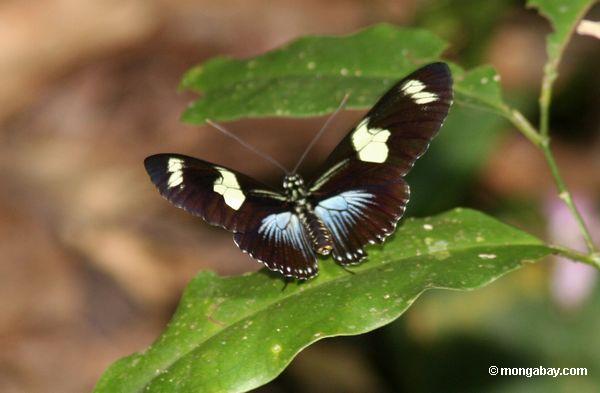 秘鲁Heliconius sara 蝴蝶. (Photo by R. Butler) 秘鲁Heliconius sara 蝴蝶. (Photo by R. Butler)
|
写 Rhett Butler. 翻译 Che Fei
07/12/2007
映像生物多样性
在热带雨林中,由于植物终年生长, 它们必须不断地防范着各种各样捕食者的侵犯.在数百万年的进化过程中,它们已经形成了种类多样的的机械和生化防卫措施. 机械的防卫手段如荆棘、刺、刺毛等,这些植物会产生一些化学物质,象生物碱、单宁、有毒氨基酸等,植物的刺毛看上去成为了这些化学物质的次级保护屏障.
| 药用植物
经过严格的物竞天择过程,各种植物也一直在完善各种各样的化学防卫手段来确保它们在数百万年的进化过程中能够幸存下来, 它们正逐渐成为珍贵的有着可观药用价值的化合物天然库.这些植物合成化学物质,以防诸虫、感染及草食动物的侵害,在这个过程中,它形成了强有力的化学模板,而药理学家正式利用它来合成新药.
|
像生化战争一样, 作为回应,草食昆虫对这些化合物有了适应性,并且取食这些植物的昆虫能够自己解毒. 最后的结果是,任何已知的昆虫都已经适应了以只有有限数目的植物种类为食的生活,而这些个体植物对大多其他的昆虫来说仍是有毒的.
植物与昆虫间的这种有趣的关系不断发展着,就像Heliconid 蝴蝶和西番莲属的激情花葡萄树之间的那样,激情花葡萄树含有氢化物为基底的化合物用来保护自己免受捕食者的捕食。然而Heliconid 毛虫已经适应了这些化合物而以葡萄树的叶子为食.因此Heliconid 蝴蝶直接把卵产在激情花葡萄树上, 以便这些蝴蝶幼虫更容易取食. 而激情花通过不断发展新的方法反适应于Heliconid 蝴蝶的这种行为,从而阻止它们将卵产在叶子上.有一种叫西蕃莲的植物经过进化的结构(实际上是蜜腺)能够为蚂蚁筑巢并能为它们生产过量的花蜜.作为回报,这些蚂蚁攻击任何侵犯它们主人的生物,包括蝴蝶卵. 更胜一筹的是,这种叫西番莲的植物有能够摹拟Heliconid 蝴蝶卵的结构.由于Heliconid 蝴蝶不会在已经有卵(或看上去有卵)的叶子上产卵,它们会继续寻找其他的植物.利用这种方式,西番莲不再利用生产花蜜诱使蚂蚁防范的这种被许多其他植物所采用的作为最基本防卫手段的办法就能阻止Heliconid 蝴蝶的侵犯. 发育成蝴蝶的Heliconid毛虫基本保持着象幼虫那样取食这些氢化物的习性,这使得蝴蝶成虫成为了捕食者口中一道"难以下咽"的美餐.对于捕食者来说, Heliconid 蝴蝶身上的显著的图案和体色是其毒性组成的一种警示标志.当捕食者吃这些蝴蝶并体验到一股难受的味道时,它这才明白它的糟糕经历与猎物身上的图案和颜色之间有着如何的联系.当捕食者下次再看到这种体色时,它很可能就不会再取食这种猎物了.
雨林中的许多动物都有着这样的本领,即通过体色来显示自身的毒性从而免遭捕食者毒口的厄运.这些有毒的化学物质几乎不能杀死捕食者,但是能给它们带来严重的创伤.即使毒物杀死了捕食者,一点用处也没有,因为下一个捕食者还会犯同样的错误-吃猎物.而这样捕食者就会因为毒性作用而感觉"不适",从而使捕食者识别了毒素并不再取食这些不"可口"的猎物和具有"拟态"功能的生物.
复习题:
- 为什么一些雨林动物(尤其昆虫和蛙类)都有明艳的体色?
- 植物是如何保护自己免遭捕食者侵害的?
[英语]
续: 雨林中的"拟态"和"伪装"
|
|
|
MONGABAY.COM
Mongabay.com 是一家专门提供自然环境新闻资讯的门户网站。
菜单
雨林的多样性
热带雨林支持着地球上生物的多样性.
雨林多样性-气候,太阳能和稳定性的作用
湿热气候对森林的变化起着很重要的作用.
雨林多样性 - 冠层结构、土壤对林区生物多样性的影响
由于热带雨林中新的取食来源、新的隐蔽场所以及新的物种间相互影响的地区的出现,冠层 系统的生物多样性又增加了. 事实上,据估计雨林中大约有70-90%的生命生存在树上.
雨林年的多样性-短期的变化,冰川期,群落交错带
雨林和它的多样性并不是始终不变的,它是受到一系列因素包括大火,树木的枯萎,人类小规模的砍伐和熔岩的流动等影响的产物.这些事件给了新树种在高耸的冠层树之间有生存空间并得以生长的机会,从而增加了雨林的多样性.
印象中的多样性- 雨林生物多样性
在热带雨林中,由于植物终年生长, 它们必须不断地防范着各种各样捕食者的侵犯.在数百万年的进化过程中,它们已经形成了种类多样的的机械和生化防卫措施.
欺骗的艺术 - 在雨林中的拟态和伪装
对捕食物和被捕食来说,常用的拟态有三种:贝氏拟态,缪氏拟态和自身拟态。对动物物种来说拟态都是比较相似的,而伪装是指动物看起来像没生命的物体.
|
|
|
|